Waitangi
Just for a change, we headed west from Rawene, making for Waitangi, on the shores of the Bay of Islands.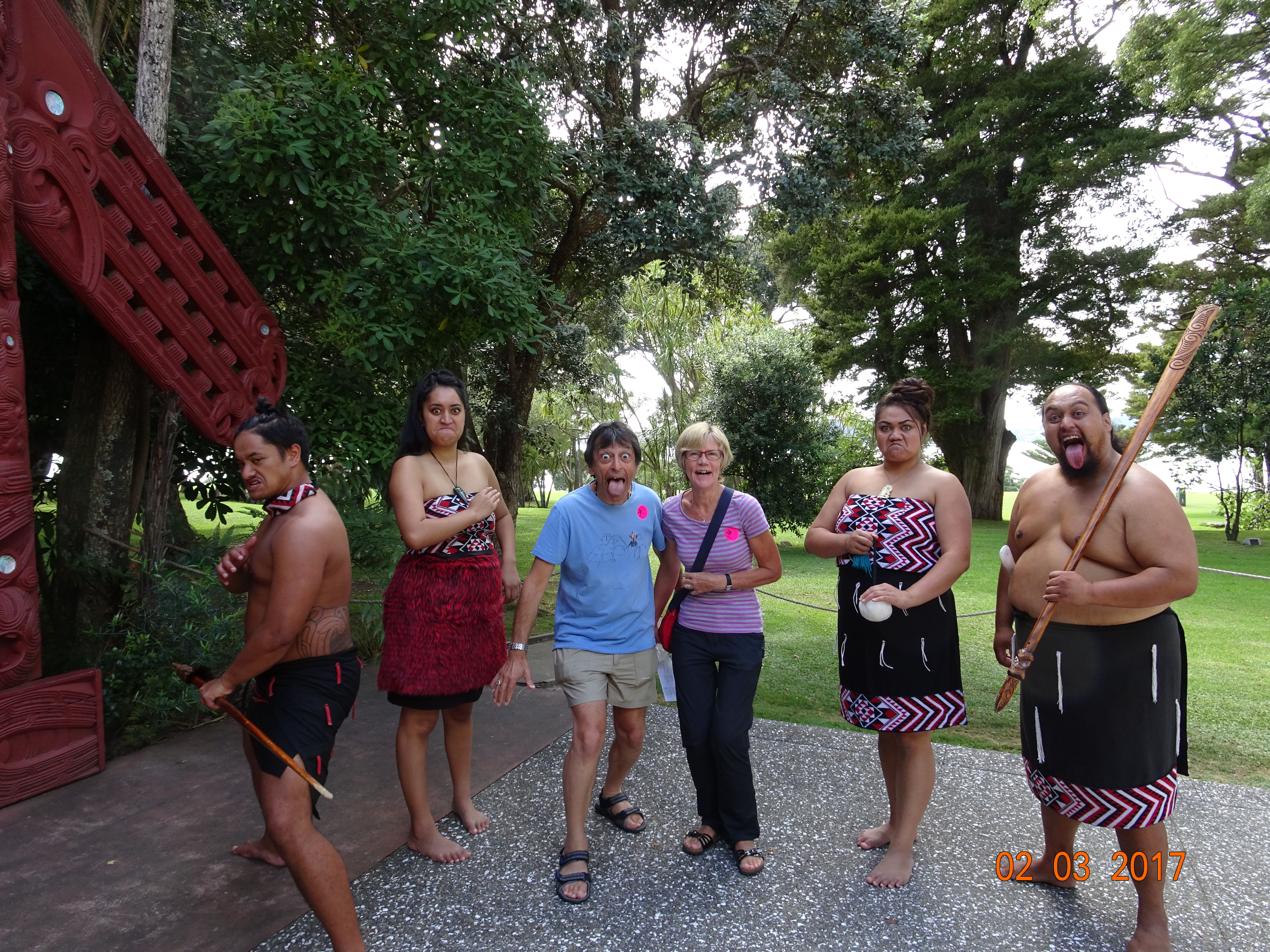
It was here, in 1840, that a group of Maori leaders signed what is considered to be New Zealand’s founding document. The Maori gave the British monarch sovereignty over NZ in exchange for the rights and privileges of being British subjects. The signing took place in a marquee in the garden of James Busby, the “British Resident” at the time. The house and garden, along with other land, was gifted to the nation in 1932 and is now one of the country’s most important historic sites.
We arrived just in time to jump onto a guided tour of the treaty grounds. As we walked around, the tour guide included a lot of background information about the treaty, the signing and some of the issues that it provoked.
The first stopping point was a shelter that contains the world’s largest war canoe. Named Ngātokimatawhaorua, it probably has the world’s longest name for a canoe! Launched in 1940 as part of the treaty centenary celebrations, it is 35 feet long and can take up to 180 people. Since 1974, when the Queen designated it HMS Ngātokimatawhaorua, it has been part of the British navy.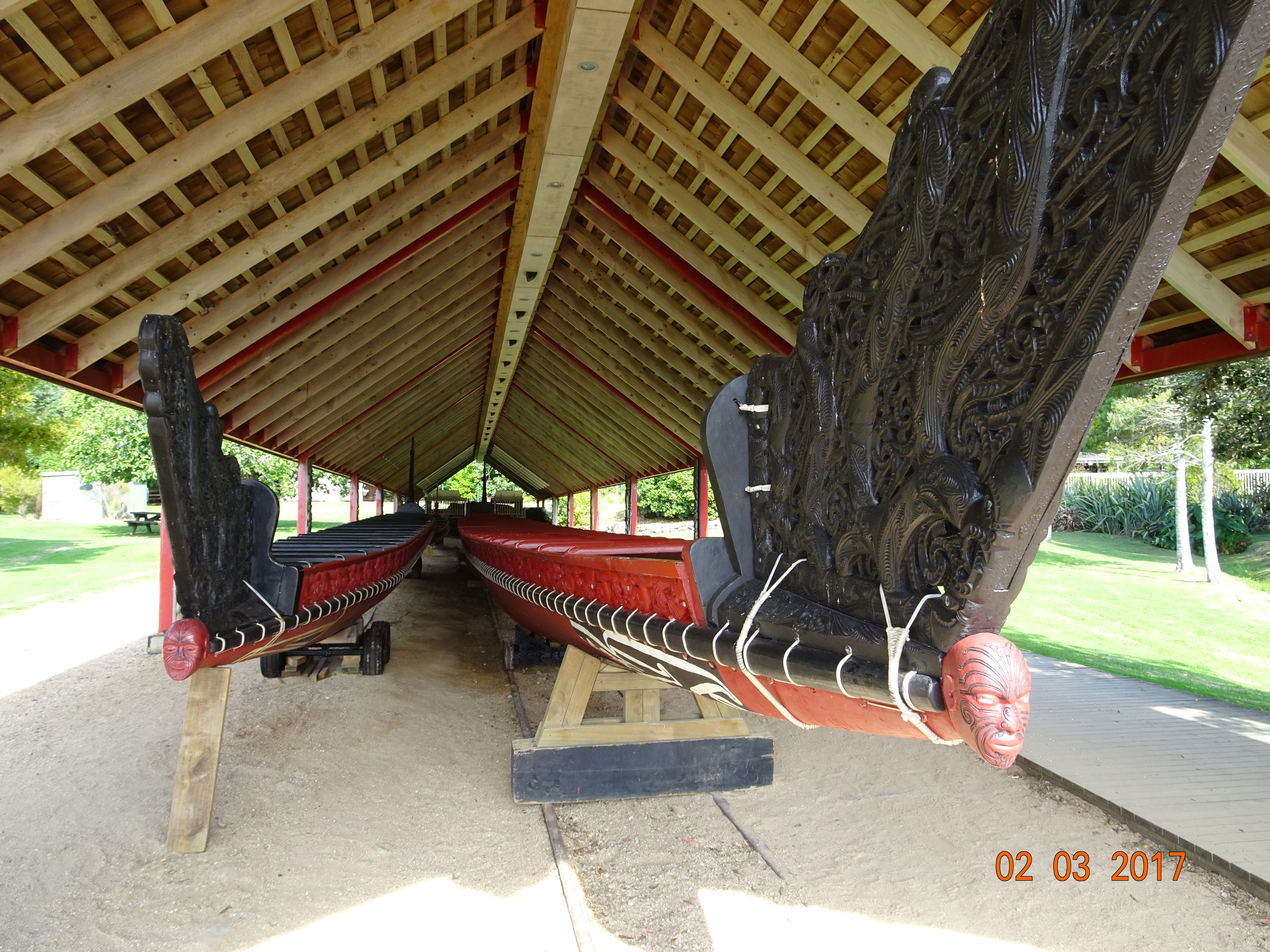
We then toured the grounds, which are simply stunning, as they look out over the Bay of Islands. If you’re going to give away your country, this is the right setting for it. At the spot where the treaty was signed, there is now a flagstaff flying the three official NZ flags; the United Tribes of NZ, the Union Jack and the current NZ flag.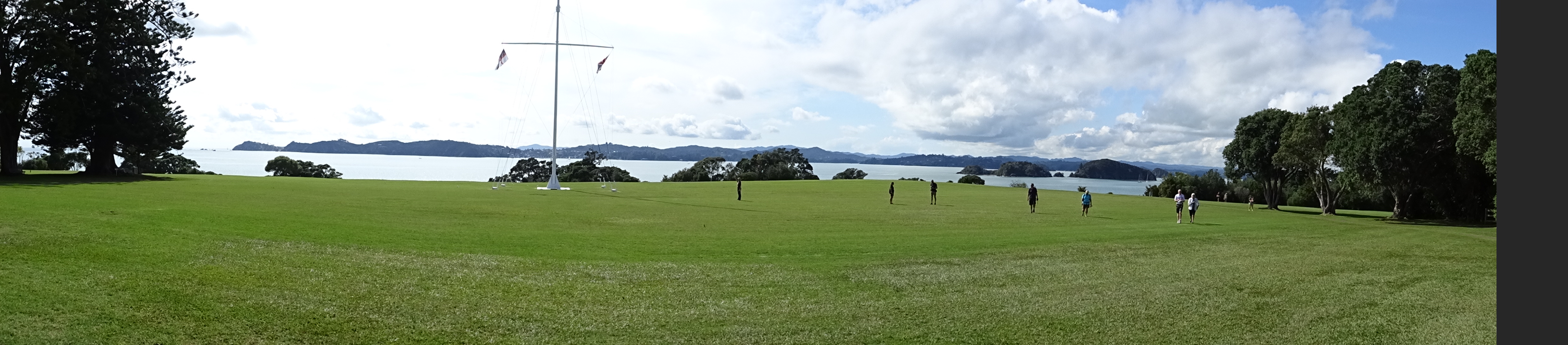
(You’re probably thinking, “There’s only two flags”. There’s something you should know about how I take photos. Unless I put my glasses on, I can’t see the camera monitor, so I just point the camera in the direction I’m looking and hope for the best. The third flag is off the top of the picture.)
The tour ended at James Busby’s wooden Residency, which was a prefab. It was pre-cut in Sydney and shipped to NZ with a set of instructions. The house was derelict when given to the nation and had to be restored. A couple of the rooms are how they might have looked in Busby’s time.
I should add that this must be the only tour I’ve ever been on that didn’t end at the gift shop! Well done Waitangi!
Next to the Residency is a carved meeting house, Te Whare Rūnanga. Normally, a meeting house faces east, the direction from which the Maori originated, but this faces the Residency to symbolise the partnership between the Maori and the British. This particular meeting house includes carvings in styles of all the main regions of NZ.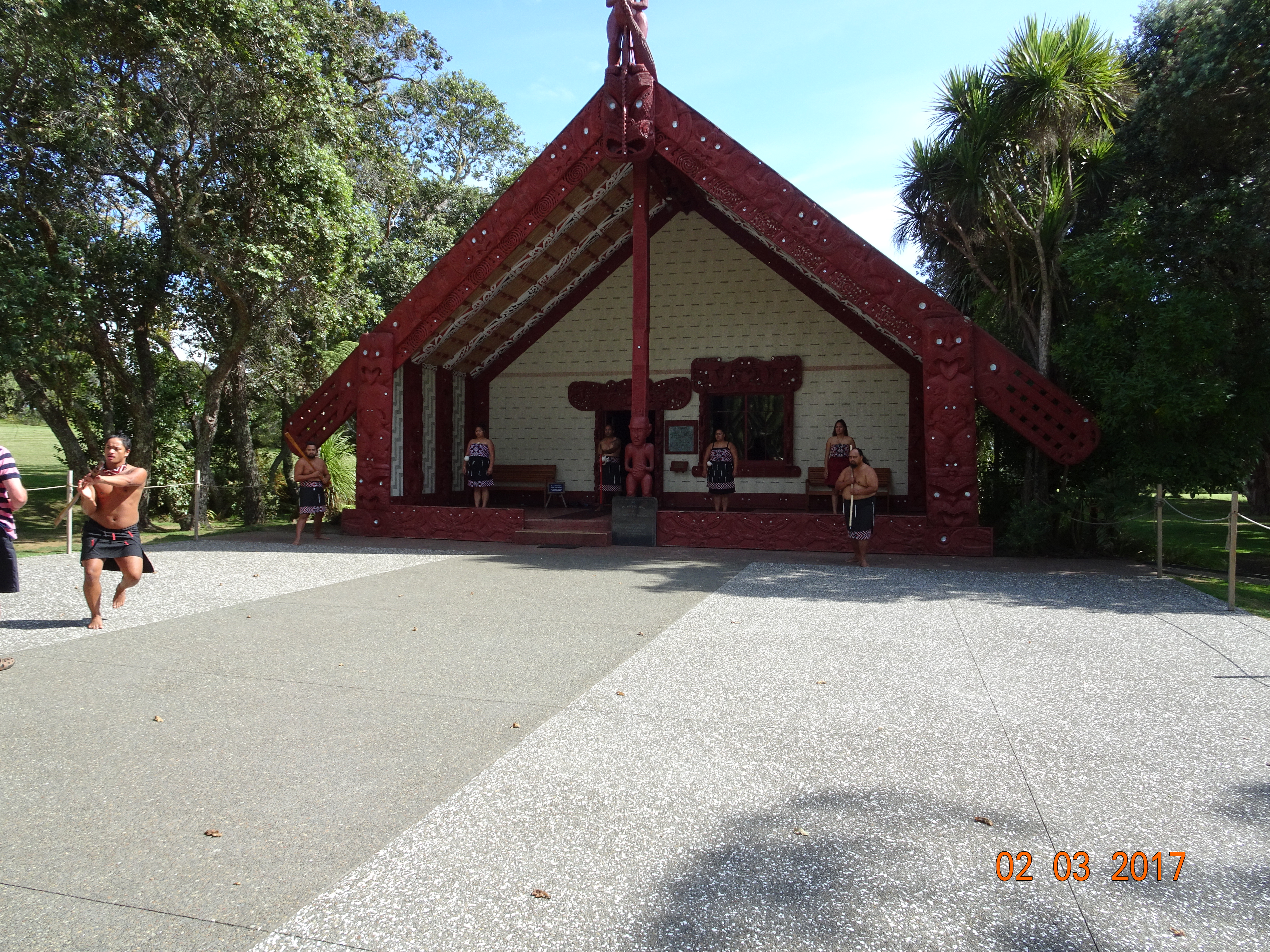
At the meeting house, we had our Cultural Entertainment. This started with a ritual challenge before we were allowed inside, and then featured chanting, dancing and music. And ended with a photo opportunity!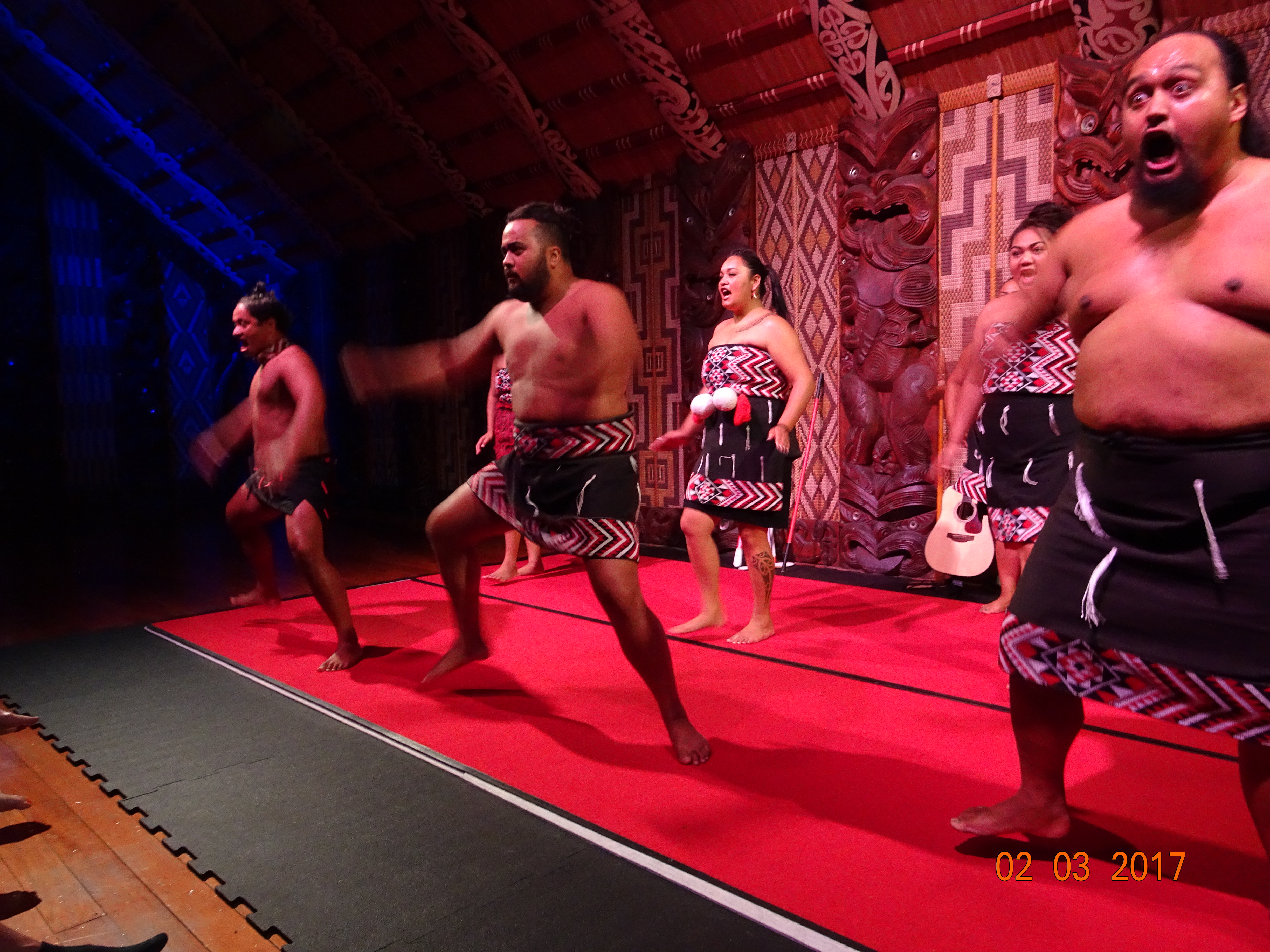
Finally, we walked through the museum, which is one of the better ones we’ve been to in NZ, being laid out to tell the history of the treaty and its consequences. Which I’m not going to go into here as I don’t know enough about it.
 Steve and Diane's New Zealand Adventure